Two Tests, thirteen days, and almost no margin for error. India’s tour of Sri Lanka begins in Galle on August 15 — Independence Day, as it happens — and finishes at the SSC in Colombo barely a week later. Short series are unforgiving: lose the first Test and there is no time to think, let alone recover. Add the context of India’s 0-2 home defeat to South Africa in their last World Test Championship assignment, and every point in this 2025-27 cycle suddenly feels precious. Shubman Gill’s 15-member squad has been named, a four-day practice game in Colombo starts on August 7, and the selectors have left the captain and the team management with five genuinely tricky calls to make. Let us take them one at a time.
1. Replacing the irreplaceable
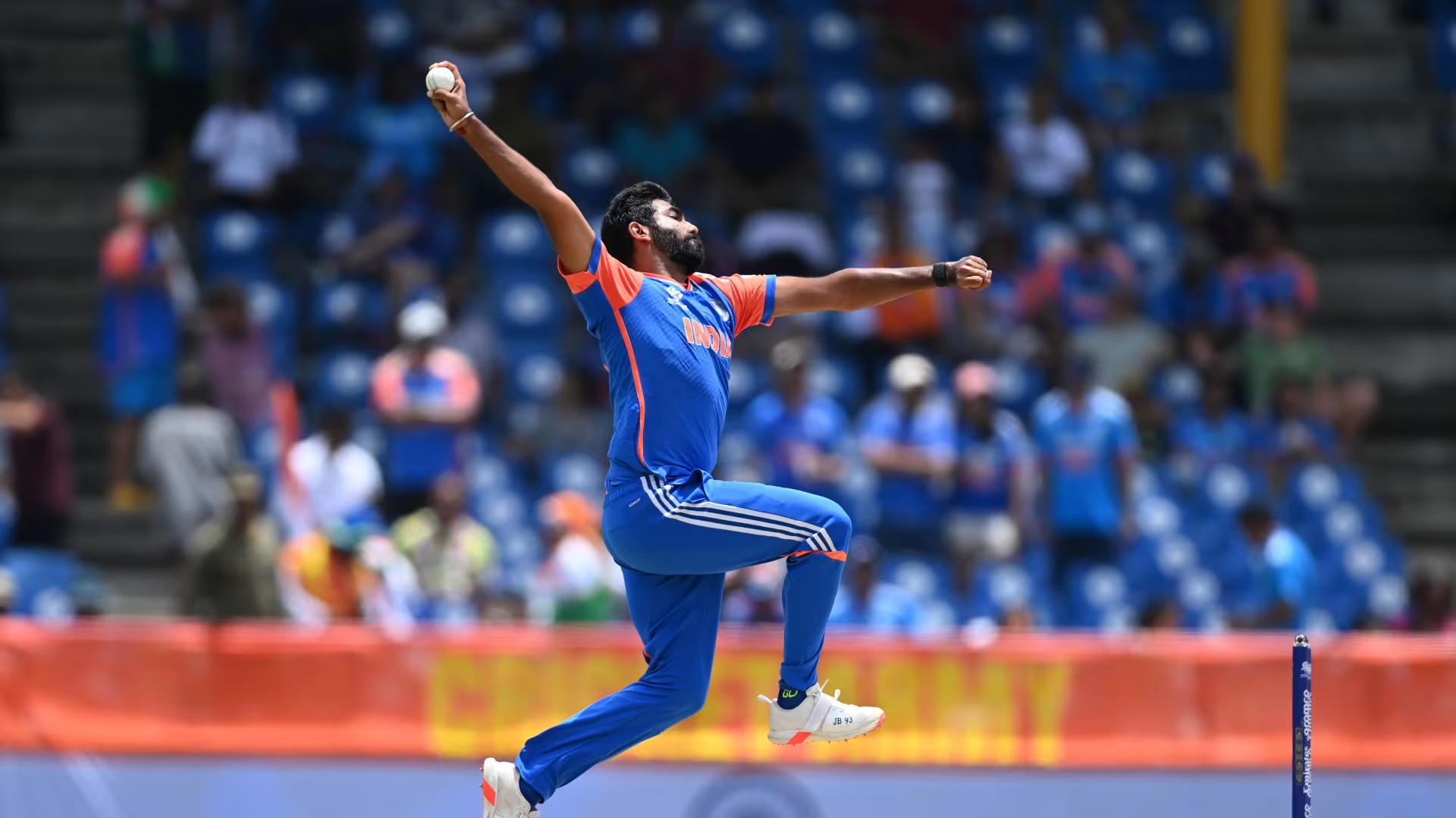
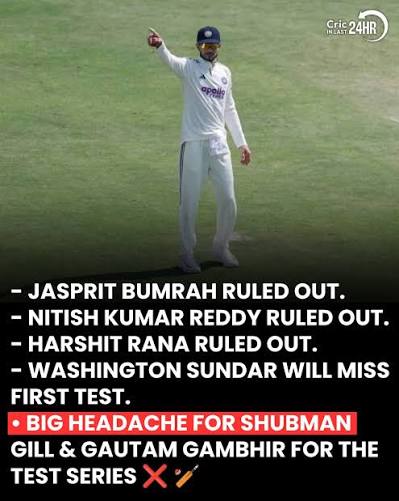
The biggest headache arrived before the tour even began: Jasprit Bumrah is out. Initially named in the squad subject to fitness clearance, he was later ruled out of the series entirely, with Jammu and Kashmir quick Auqib Nabi called up in his place. Now the questions multiply. Mohammed Siraj will lead the attack — that much is settled — but who partners him? Prasidh Krishna brings bounce and experience; Gurnoor Brar is the newer name with a big engine; Nabi is the wildcard on debut-watch. And underneath all of it sits the more brutal Galle question: on a surface that starts turning by day two, India may field only two seamers, and the second one might bowl a dozen overs a day at most. Picking the right man for a small but crucial job is exactly the kind of decision that quietly settles short series.
2. The spin logjam
Ravindra Jadeja is back, fully recovered from the tennis elbow he picked up during IPL 2026, and his return answers one question while asking three more. He walks straight into the XI — a frontline spinner who bats in the top seven and fields brilliantly is not a player you ease back gently. Kuldeep Yadav’s wrist spin is the attacking option and surely plays in Galle too. That leaves, at most, one remaining slot and two candidates: Manav Suthar, the young left-armer, and Saransh Jain, the 33-year-old off-spinning all-rounder whose maiden call-up was the feel-good story of the squad announcement.
Jain offers batting depth and an off-spinner’s angle against Sri Lanka’s left-handers; Suthar offers youth and a glimpse of the future. Washington Sundar’s unavailability for the first Test removes the easy compromise everyone expected. Whichever way Gill leans, a very good spinner will be carrying drinks in Galle. A nice problem, sure — but still a problem.
3. Who bats at No. 3
KL Rahul, now the vice-captain, and Yashasvi Jaiswal will open. After that it gets interesting. Sai Sudharsan is the anointed No. 3, but his place in the squad came with an asterisk — fitness clearance pending from the BCCI’s Centre of Excellence. If he is passed fit, he plays and the order picks itself. If not, the options are Devdutt Padikkal, drafted in as top-order cover, or a reshuffle that pushes Gill up a spot and lengthens the middle order. Whoever gets the job should expect very little of the new ball and a great deal of spin, often with fielders crowded around the bat from the first session onwards. It is a role for soft hands and hard nerves, and India need to be sure whose they trust.
4. Pant, Jurel, or somehow both
Rishabh Pant keeps wickets for India in Tests. That has been the default setting for years, and nothing in the squad list changes it — officially. Unofficially, Dhruv Jurel has spent 2026 making the decision harder. He captained India A on their multi-day tour of Sri Lanka, he is regarded as the tidier gloveman standing up to spin — no small thing when Kuldeep is ripping the ball past the outside edge on a Galle turner — and his batting is closer to Test class than backup class. The radical option is playing both, with Jurel picked purely as a batter. The likely option is Pant with the gloves and Jurel waiting his turn. But if Pant’s returns dip while the team grinds through a tense, low-margin series, this conversation is going to get loud very quickly.
5. Five bowlers or six batters
Underneath every individual call sits the structural one: how deep does this batting order need to be? The scars from the South Africa defeat — collapses against spin, at home — argue for an extra batter. The two-Test, must-win arithmetic argues for twenty wickets and a fifth bowler. Jadeja’s return softens the dilemma, because he is effectively both at once, and if Saransh Jain plays, India could field five frontline bowling options while still batting deep. But Galle has a long memory and a cruel habit of exposing whichever end of the trade-off a visiting team skimped on. Gill and Gautam Gambhir will have watched the practice-match surface in Colombo like hawks; the final call probably will not be made until they stand on the Galle pitch on the morning of the game.
The bottom line
None of these are bad problems to have. A returning Jadeja, too many good spinners, two Test-quality wicketkeepers and a queue of hungry fast bowlers is the kind of headache most cricketing nations would happily pay for. But short series do not forgive wrong answers, and this WTC cycle has already cost India once. Sri Lanka at home, with a fired-up spin attack and a Galle crowd behind them, are never the pushover the rankings suggest. By the evening of August 15 we will know which way Gill and his selectors jumped — and by the time the SSC Test winds down in Colombo, we will know whether they were right.